If you have a player between 12U and 18U, you have probably heard some version of the same worried question in the bleachers this year. With college athletes getting paid, rosters getting capped, and transfers moving all over the country, is there still a place for a kid coming out of high school?
The honest answer is yes, but the path looks different than it did a few years ago. College and professional baseball have both changed their rules in ways that ripple down to travel ball. None of this is a reason to panic. It is a reason to plan.
What Actually Changed at the College Level
Three big shifts happened in a short span of time.
First, name, image, and likeness money arrived. NIL means a college athlete can be paid for the use of their name, picture, or personal brand, such as an endorsement or a social media promotion. The NCAA adopted an interim policy allowing these deals starting July 1, 2021. Today, college athletes must report outside NIL deals worth $600 or more to a reporting system called NIL Go, run by the College Sports Commission, the independent body that now enforces these rules.
Second, schools can now pay athletes directly. On June 6, 2025, a federal judge approved the House v. NCAA settlement, a court agreement that ended a major lawsuit over athlete pay. Starting July 1, 2025, schools that take part can share revenue directly with athletes, up to a yearly cap that was estimated at $20.5 million per school for 2025-26.
Third, and most important for baseball families, the old scholarship limit was replaced with a roster limit. Division I baseball used to allow 11.7 scholarships per team, split among many players. Under the new rules, participating schools are limited to 34 players on the roster, but they may give scholarship money to any or all of those 34 players. Some current players were protected as "designated student-athletes" and do not count against the limit for the rest of their college eligibility, so some teams are still above 34 for now.
The Transfer Portal Is Now a Recruiting Competitor
The transfer portal is the NCAA system a college athlete uses to announce they want to move to another school. In Division I baseball there are two windows each year to enter it: December 1 to 15, and a 30-day window that begins seven days after the NCAA championship selections. In 2026, that second window ran from June 1 to June 30.
The volume has exploded. Baseball America reported that when the 2025 window opened, more than 1,500 Division I players had entered by the next morning, double the first-day total from the year before. The same report found that 61 Division I programs took at least 10 transfer commitments that offseason, compared with 36 the year before and 20 in 2023.
One Division I recruiting coordinator put it bluntly to Baseball America: "This is killing high school recruiting." Coaches now often prefer a proven college player who can help right away over a high school senior they would have to develop for two or three years.
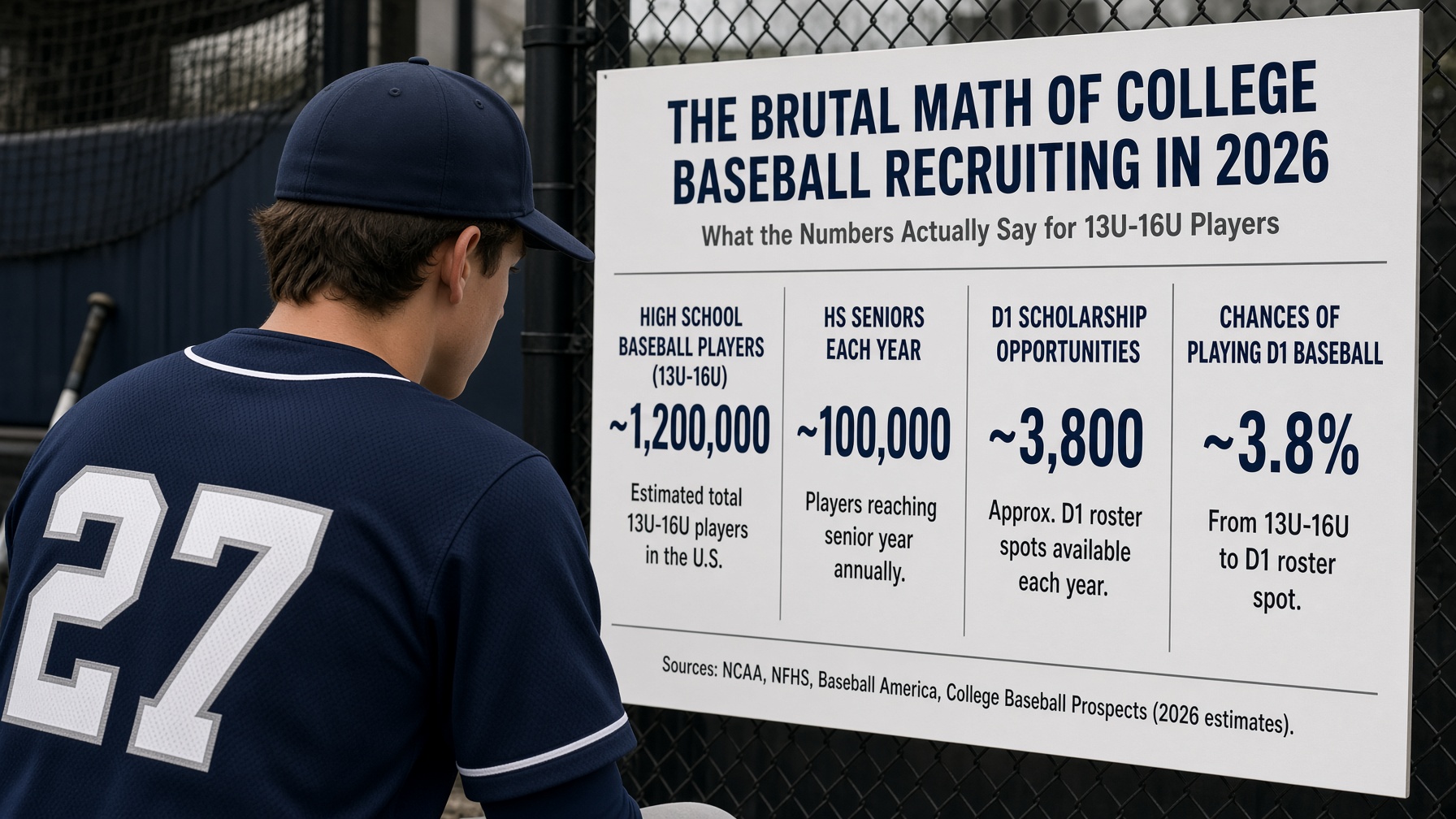
Put a 34-player roster limit together with a busy transfer market, and the math is simple. There are fewer open spots for high school players at many Division I programs, and the spots that remain tend to go to players who are ready to contribute early. Our article on The Brutal Math of College Baseball Recruiting in 2026 breaks down the numbers families should know.
The MLB Draft Got Smaller
Professional baseball changed too. Starting in 2021, the MLB Draft was cut from 40 rounds to 20, and the number of minor league teams tied to big league clubs was trimmed by about a quarter. The 2026 draft, held in July, selected 613 players over 20 rounds.
Under current rules, high school graduates who have not attended college can be drafted. Junior college players are eligible after at least one year. Players at four-year colleges are eligible after their junior year or once they turn 21.
There is also real uncertainty ahead. The current agreement between MLB and its players' union expires on December 1, 2026, and the two sides are still negotiating. Draft rules could change in the next agreement, so families should be careful with anyone who claims to know exactly what the draft will look like for a current 14U player.
With half as many rounds, far fewer amateurs move into pro baseball each year. Players who might once have been late-round picks are more likely to stay in college, which adds competition for roster spots.
What This Means for Youth Travel Ball
These changes do not touch a 12U player directly, but they shape the decisions families make after that.
Readiness matters more than projection. College coaches with fewer spots lean toward players who can compete sooner. Strength and sound fundamentals by 16U and 17U carry more weight.
Alternative paths are more valuable, not less. Junior college, Division II, Division III, and NAIA programs are where many players get real innings and grow. A strong junior college season can also lead to draft eligibility or a later four-year move.
Academics are a bigger lever. A player with strong grades gives a coach more ways to build a financial package, and opens doors at schools where athletic aid is not the only money available.
High school NIL is not a business plan. Most states now allow high school athletes to make NIL money in some form, but the rules vary by state association, and a few states still do not allow it. For nearly every baseball family, NIL dollars should not factor into what you spend on travel ball.
What Is Losing Value
Some things families have paid for are worth less now.
Early "commitment" chasing at 13U and 14U. With rosters turning over every year through the portal, a promise made years in advance means less.
Collecting showcase events with no plan. Our article Are Showcase Companies Creating False Hope for Families? covers how to tell a useful event from an expensive one.
Rankings and patches. A team's national ranking does not show a college coach whether your player can help their roster next spring.
What Still Matters Most
The fundamentals of getting recruited have not changed, even though the system around them has.
Skill that can be verified. Throwing velocity, exit velocity, speed, defense, and pitchability are measured and compared.
Character. Coaches watch how players handle failure, how they treat teammates, and how they act in the dugout. A roster of 34 leaves little room for players who create problems.
Academics. Grades are largely in your player's control and widen the list of schools that make sense.
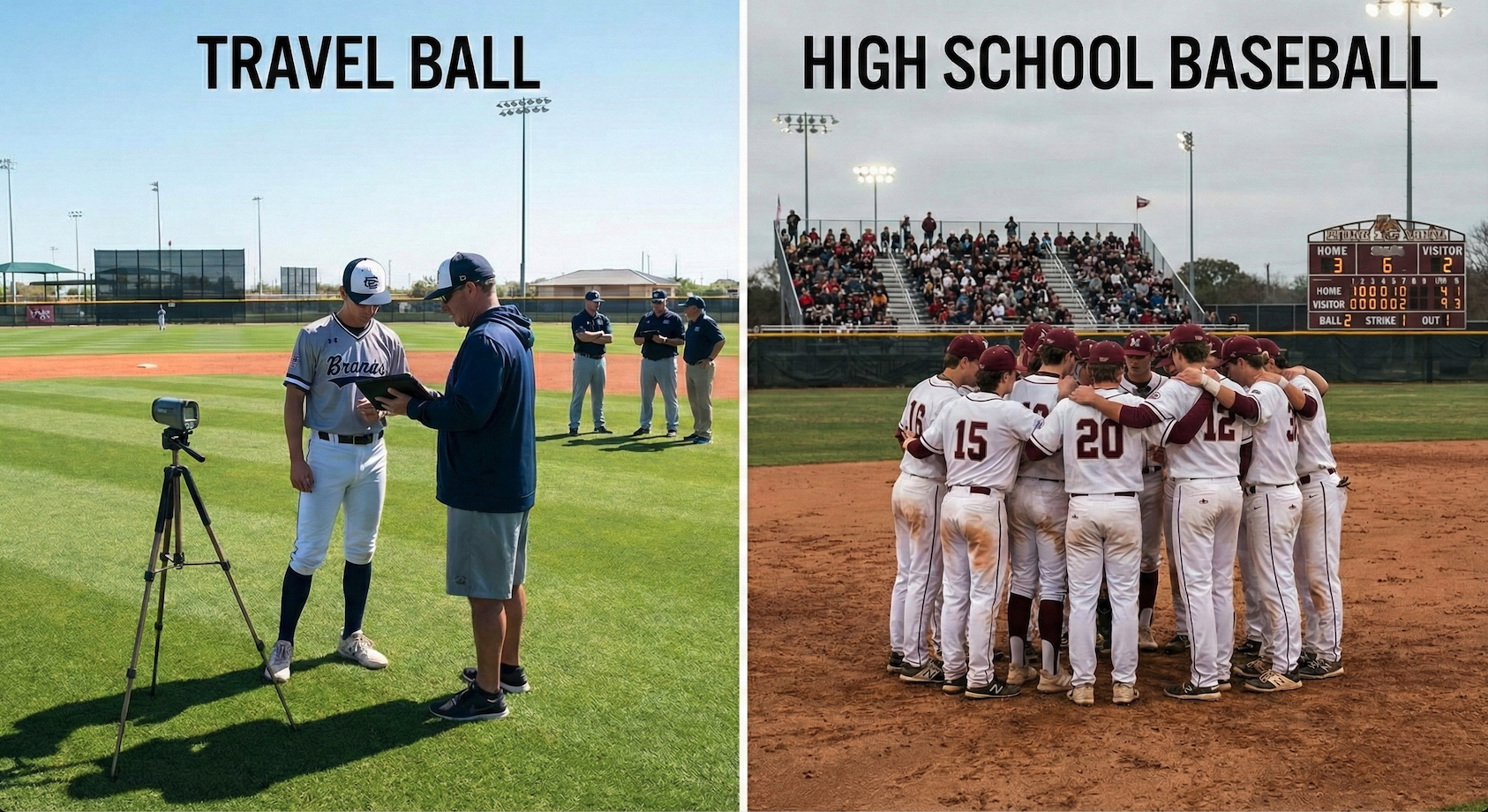
Fit. A program where your player can actually play is worth more than a logo on a hat. Our article Travel Ball vs. High School Baseball: When to Double Down and When to Diversify can help families weigh where their time and money go.
How Families Can Keep Control
Ask coaches and organizations how many of their recent players went on to play at any college level, not just Division I. Build a realistic list of schools across divisions by about 16U. Keep spending tied to development, not exposure. And remember that the rules are still moving, so treat any promise about the future of NIL or the draft with healthy skepticism.
At CurveballCritiques.com we believe that families make their best decisions with honest information, not hype. NIL, the transfer portal, and a smaller draft have changed the landscape, but skill, character, and academics still open doors. Before you choose your next program or showcase, read honest reviews from other families on CurveballCritiques.com and decide what is right for your player.