Every fall, the same pitch shows up in parent group chats. Sign up for this showcase, this ranking event, this exposure tournament, and college coaches will finally see your player. Some of those events are worth it. Many are not. And for most families, the bigger problem is not a lack of events. It is that the player has no clear, honest profile a coach can find and trust.
The most useful parts of a recruiting profile cost very little. This playbook covers what to build first, how to use video and social media well, how to lean on the coaches you already have, and when a paid event actually earns its price.
Start With the Basics a Coach Needs
Before any video or event, put together a simple one-page player profile. Think of it as a resume a coach can read in under a minute.
Name, graduation year, positions, and bats and throws
Height, weight, and any measured numbers you can stand behind, such as a timed 60-yard dash or a recorded throwing velocity
High school and summer team, with each head coach's email and phone number
Grade point average, test scores if you have them, and intended areas of study
A link to a skills video and a short schedule of upcoming games
Only list numbers that were actually measured, and note where and when. A coach who sees a velocity on paper and a much lower one in person will remember the gap.
If your player hopes to play at an NCAA school, register with the NCAA Eligibility Center, the office that confirms academic and amateur status. The NCAA recommends registering early and offers a free Profile Page account for students who are still exploring or are not yet being recruited. Players who plan to compete at a Division I or II school will need to move to a paid certification account later.
Player Highlight Video Tips That Coaches Actually Use
In baseball, a skills video often matters more than a game highlight reel. NCSA, a large recruiting service, notes that baseball coaches mainly want to see position-specific skills filmed in practice, because game footage rarely captures the right angles. You do not need a production company. A phone on a tripod will do.
Keep it short. NCSA recommends five minutes or less, and FieldLevel suggests two to five minutes.
Put the best work first. NCSA reports that some coaches do not watch past the first 20 or 30 seconds.
Open with a title card listing name, graduation year, positions, school, and contact information.
Film steady, unobstructed angles. Avoid shooting through a fence or backstop, and avoid zooming in and out.
Skip the music and special effects. FieldLevel advises against slow motion and replay so coaches can see real speed and repeatable mechanics.
Show the result of each rep. If your player fields a ground ball, include the throw. If they hit, show where the ball went.
Update the video regularly, since a coach wants to see the current player, not last year's version.
Social Media for Recruits: What to Do and What to Avoid
Social media is a recruiting tool now, and the rules allow it to be used directly. Under NCAA rules for Division I baseball, coaches can begin sending recruiting communications, including direct messages on social media, starting August 1 before a player's junior year of high school. Division II, Division III, NAIA, and junior college coaches have more flexibility on timing.
A few simple habits make a big difference.
Do use a clear account name and a profile line with graduation year, positions, school, and a link to the skills video.
Do post short clips of good reps, measured results, and academic achievements.
Do follow and tag programs you are genuinely interested in, and keep messages to coaches brief and specific.
Do not post anything you would not want a coach, teacher, or future employer to read, including reposts and comments.
Do not argue with umpires, coaches, or other players online.
Do not inflate numbers. Coaches compare posts against what they see in person.
Our article Social Media Gets You Seen. Curveball Critiques Gets You Recruited. covers why visibility alone is not the same as being recruited.
Your Best Free Resource Is the Coaches You Already Have
College coaches regularly call high school and summer coaches to ask about a player's work ethic, coachability, and how they handle failure. That conversation can carry more weight than any ranking.
Help those coaches help you. Give them your one-page profile and video link, tell them honestly which schools and levels your player is targeting, and ask whether they would send a short email on your player's behalf. Then make it easy for them to say good things.
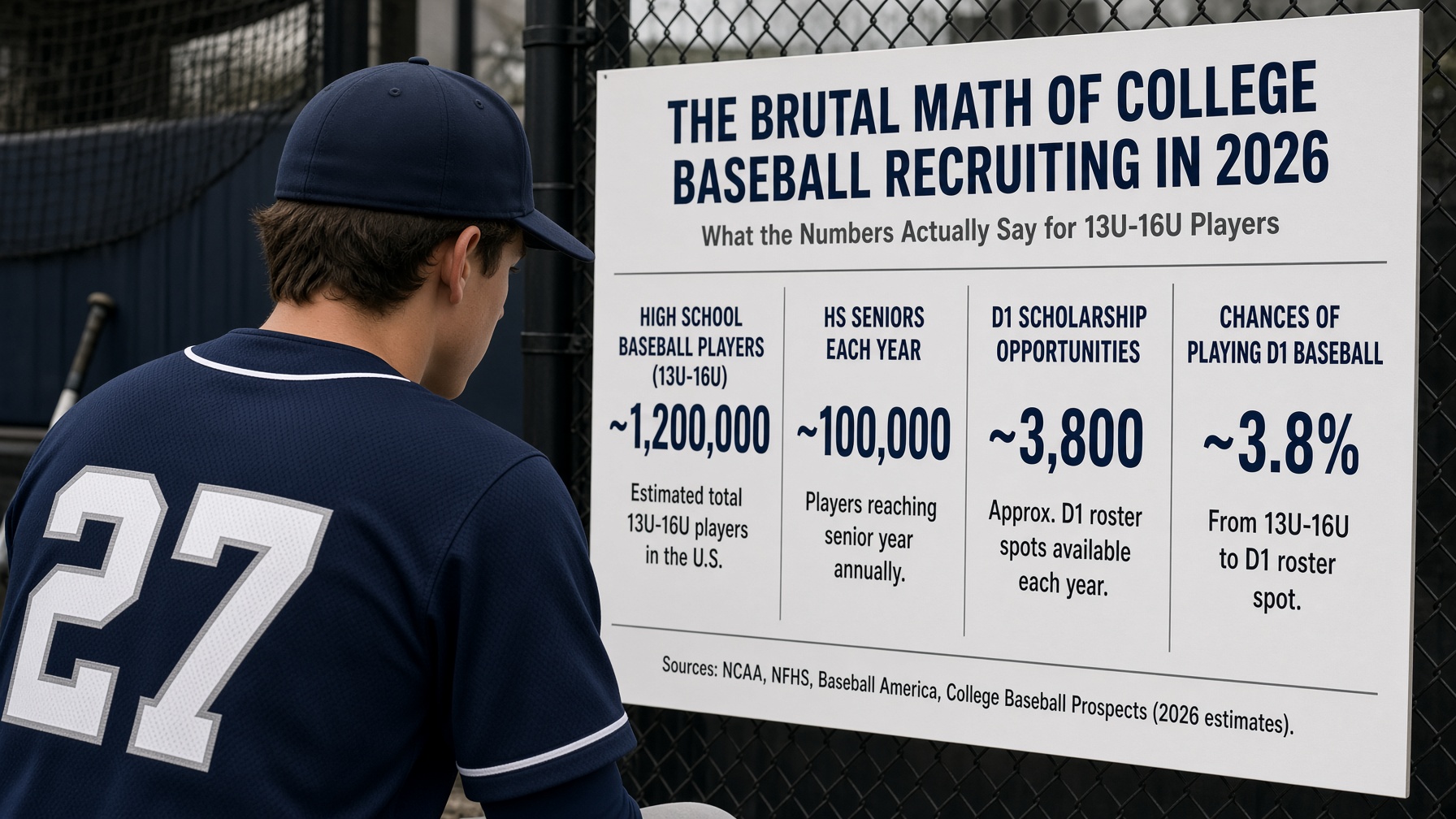
This is also where fit matters. A summer coach who has sent players to Division III or junior college programs may be more useful to your family than one whose connections are only at schools that are out of reach. Our article The Brutal Math of College Baseball Recruiting in 2026 explains why a list that spans every level gives a player the best odds.
Academic Showcases and Camps
For students with strong grades, academic showcases can be one of the more efficient events available, because the coaches attending come mostly from academically selective schools. Headfirst Honor Roll Camps is one well-known example. Its 2026 baseball sessions were listed at $1,295 each, with confirmed attending programs that included Ivy League and Division III schools.
College camps are another option. A camp run by a school's own coaching staff lets a player see the campus, be coached by the people who would recruit them, and get a feel for the program. Choose camps at schools that are a realistic academic and athletic match rather than collecting logos.
When a Paid Event Is Actually Worth It
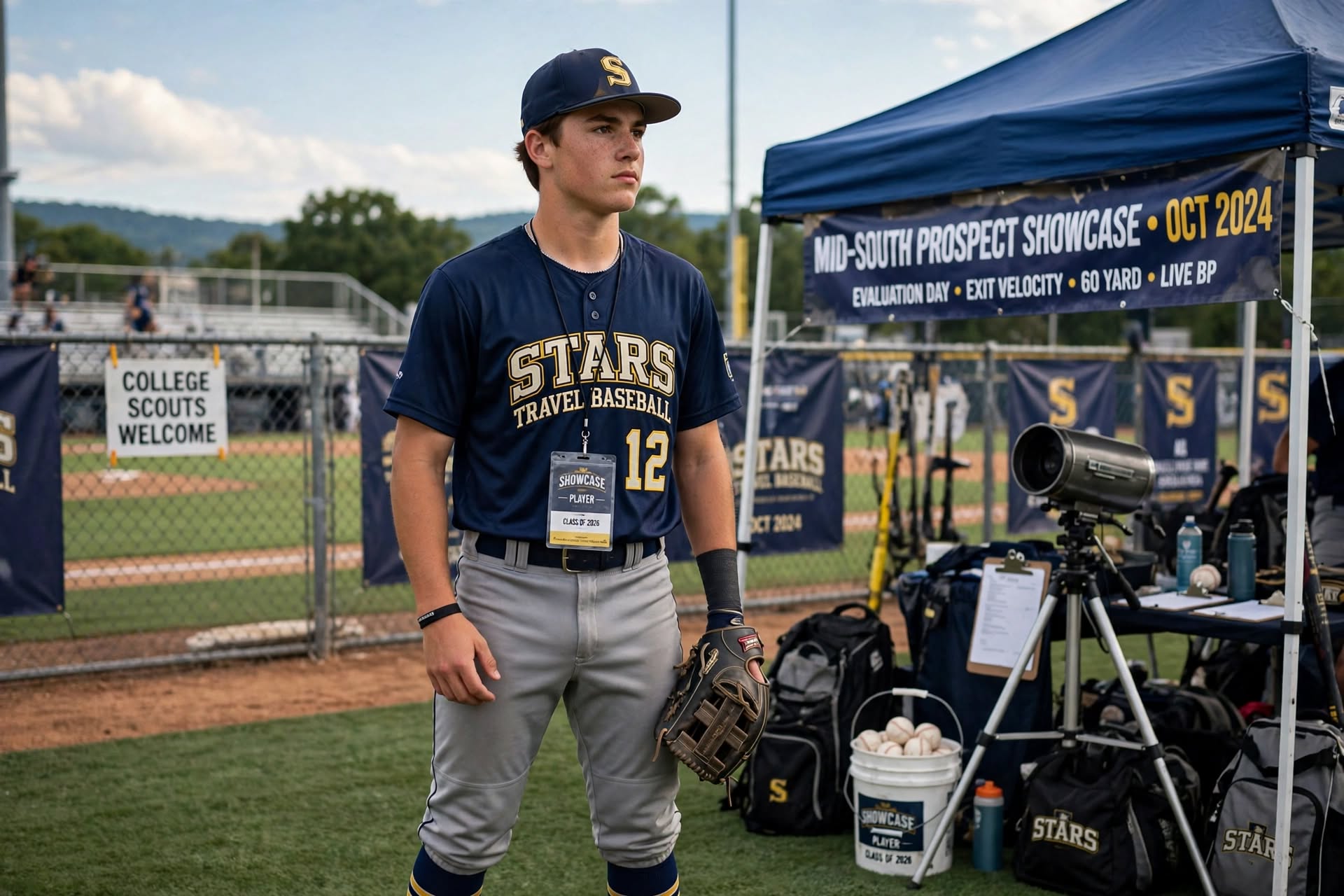
A well-chosen event can be worth the money. Before you pay, ask these questions.
Which college coaches are confirmed to attend, and are those schools a realistic fit for my player?
Will my player get enough reps to be seen, including live game innings?
Are measurements taken with real equipment, and will we receive the results?
Is my player ready to be evaluated right now, or would another six months of development show a better version?
Does this event fit our budget without cutting into training, lessons, or family needs?
If you cannot get clear answers, it is probably an exposure event in name only. Our article Are Showcase Companies Creating False Hope for Families? goes deeper on how to tell the difference.
A Simple Plan for the Year
In the fall, build the one-page profile and register with the NCAA Eligibility Center if it fits your goals. Over the winter, film a fresh skills video. In the spring, share the profile and video with your high school and summer coaches and make a list of schools across every level. In the summer, choose one or two events or camps that match that list instead of five that do not.
At CurveballCritiques.com we believe that the strongest recruiting profiles are built on honest information, steady development, and good relationships, not on how many exposure events a family can afford. Before you spend on your next showcase or program, read honest reviews from other families on CurveballCritiques.com and put your money where it will actually help your player.