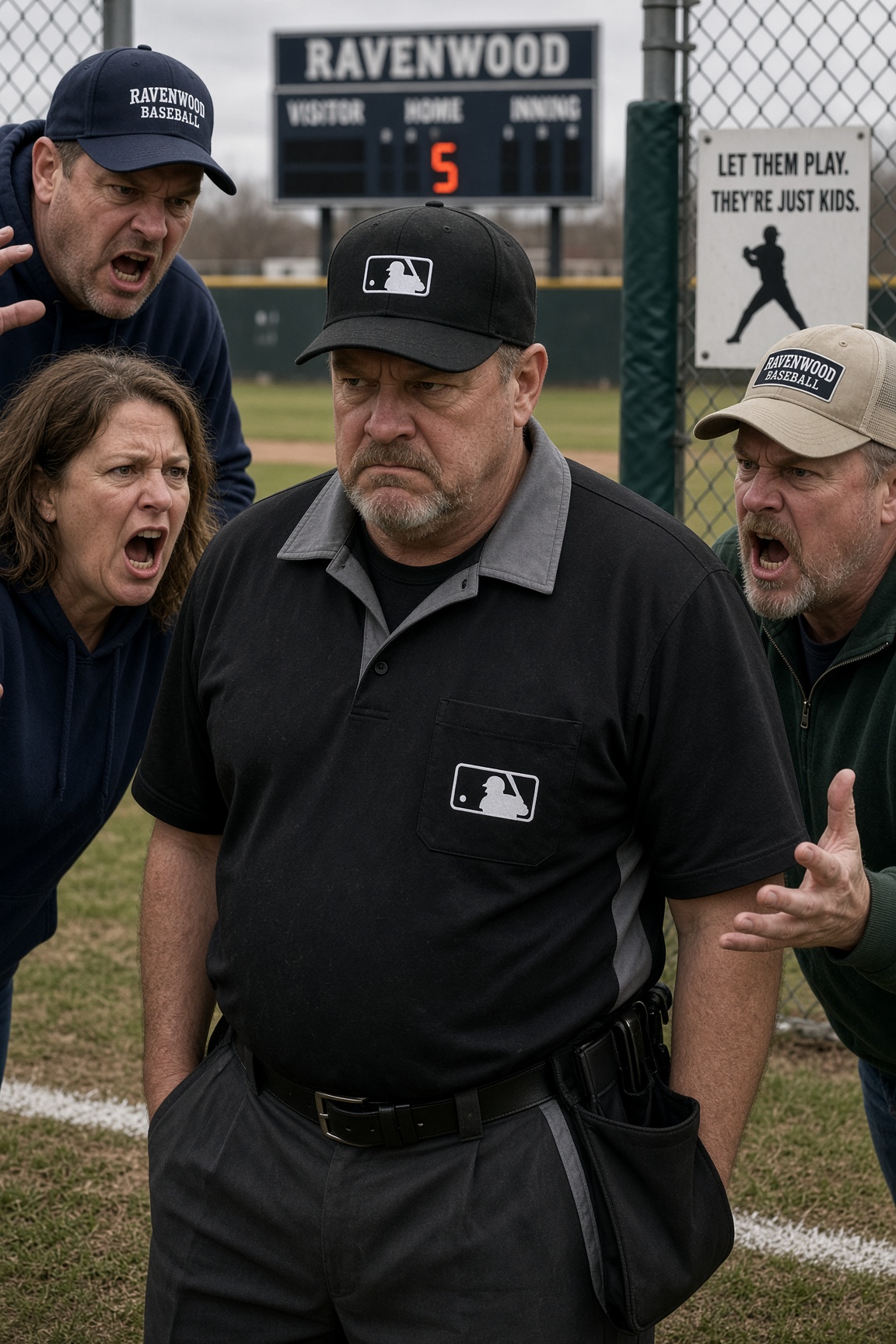
Every travel ball family has seen it. A close pitch on a full count, a bang-bang play at first, and suddenly the loudest voice at the field belongs to an adult in a folding chair. Most of the time the game moves on. But over a season, and over years, those moments add up, and good officials decide the weekend is no longer worth it.
This article is not about whether umpires miss calls. They do, the same way players boot ground balls and coaches make bad lineup decisions. It is about what parents and players can do instead of yelling, and how families can help keep enough trained officials in the game so their kids have someone behind the plate at all.
The Umpire Shortage Is Real, and Behavior Is Part of It
The best national picture of the officiating workforce comes from the National Association of Sports Officials (NASO). Its 2023 National Officiating Survey drew 35,813 responses from officials across more than 20 sports and every level of play. More than half said they had feared for their safety at some point in their career because of administrator, coach, player or spectator behavior. Nearly 12 percent said they had been physically assaulted during or after a sporting event. And 79 percent said they had taken on more assignments because of the shortage of officials.
The workforce is also getting older. The average respondent was 56.68 years old in 2023, up from 53.29 in 2017. New officials are the pipeline, and they are the hardest group to keep. The National Federation of State High School Associations (NFHS) reported in 2025 that registered high school officials rebounded to 237,811 in 2024-25, but noted that most new officials quit within one to three years and that the greatest fear for new referees is abuse from fans, especially parents.
The same pattern shows up in youth baseball. In 2025, the umpire director for Bellingham Youth Baseball in Massachusetts told CBS Boston that experienced umpires were tiring of harassment from parents, including some who followed umpires to their cars. In 2026, Utah's high school association told the Deseret News that abuse from parents, coaches and fans had pushed experienced umpires to quit and left some games understaffed or worked by a single umpire.
When a game has one umpire instead of two, more calls get made from a bad angle. The behavior that drives officials away produces exactly the kind of calls that set parents off in the first place. For more on sportsmanship trends and what kids want from the stands, see our guide to the sideline parent problem.
How to Disagree in the Moment Without Making It Worse
Disagreeing with a call is normal. What you do with that feeling is the part you control.
Let the coach handle it. In most leagues and tournaments, the head coach is the person who talks to the umpire about a call. A parent shouting from the bleachers does not change the call and makes it harder for the coach to have a calm conversation. If you think something was missed, tell the coach between innings.
React to the play, not the person. A groan when a ball skips past the catcher is human. "You're blind" aimed at the umpire is personal, and everyone within earshot knows it.
Have a reset ready. Pick one thing you do when a call goes against your kid, like looking at the scoreboard and counting to five. A habit keeps you from reacting on instinct.
Do not approach the umpire after the game. Walking toward an official in the parking lot, even to "just ask a question," can feel threatening to someone who has heard plenty all day.
What to Do After the Game
If a call or an umpire's conduct genuinely bothered you, there are better channels than the bleachers.
Wait until the next day. Most things that felt huge at 6 p.m. on a Saturday look smaller on Sunday morning. If it still matters, write it down.
Go through the coach or the organization. Coaches and club directors usually know who assigns umpires for a tournament or league. A calm note about a specific situation is far more useful than a general complaint about "terrible umpiring."
Separate judgment from conduct. Ball and strike calls are judgment. An umpire who was rude or showed up late is a conduct issue. Assigners can act on conduct. Nobody can go back and change a judgment call.
Give credit too. If an umpire handled a tense game well, tell the tournament director. Officials hear plenty of complaints and very little praise.
Teaching Kids to Respect Officials When Calls Go Against Them
Kids learn more from how adults react to a bad call than from any speech about sportsmanship.
Name the difference between frustration and disrespect. It is fine for a player to be upset about a called third strike. It is not fine to slam a helmet or glare at the umpire. Talk about this before the season, not in the car after a loss.
Focus on what they can control. A batter cannot control the strike zone, but they can control their two-strike approach. Turning a bad call into "what do I do with the next pitch" is a skill that carries well beyond baseball. For more on that mindset, see how good travel ball coaches develop players.
Make thanking the umpire normal. A quick "thank you, blue" from players and coaches after the handshake line costs nothing and changes the tone of the field.
Let them see the job. Some state associations, including Iowa and Kansas, now offer officiating courses to high school students. An older player who tries umpiring a younger division game may come back with more patience for the person behind the plate.
Support the People and Organizations Protecting Umpires
Families have more influence over the shortage than they think.
Back programs that treat officials well. State officiating leaders told NFHS that simple gestures, like escorting officials to and from the field and offering cold drinks and food, make a real difference in keeping them in the game. Ask your club or tournament what they do for umpires.
Follow the code of conduct. If your organization adopts a behavior policy for parents, sign it and live by it. A policy only works if families back it up.
Know the national efforts. In 2025, UMPS CARE Charities, the charity of the Major League Baseball Umpires, teamed up with MLB Together on a national campaign and pledge to curb verbal and physical abuse of officials in youth sports. The NFHS runs its #BenchBadBehavior and #BecomeAnOfficial campaigns.
Consider officiating yourself. Parents of former athletes and former coaches are among the groups state associations are recruiting. Anyone can start at highschoolofficials.com, which NFHS uses to connect interested people with their state association.
For more on what the job asks of umpires, read the toughest job on the field and why umpires are the x-factor in travel baseball.
The Bottom Line
No one gets every call right, and no family has to love every call. But how adults respond shapes whether there will be an umpire at the next game, whether that umpire has a partner, and whether kids learn to handle setbacks with composure. Disagree through the coach, raise real concerns after the game, teach players that respect for officials is part of competing, and support the programs that keep umpires safe.
At CurveballCritiques.com we believe that the officials who show up for our kids deserve the same respect we expect our kids to show their coaches, and that families who protect the umpire are protecting the game itself.

