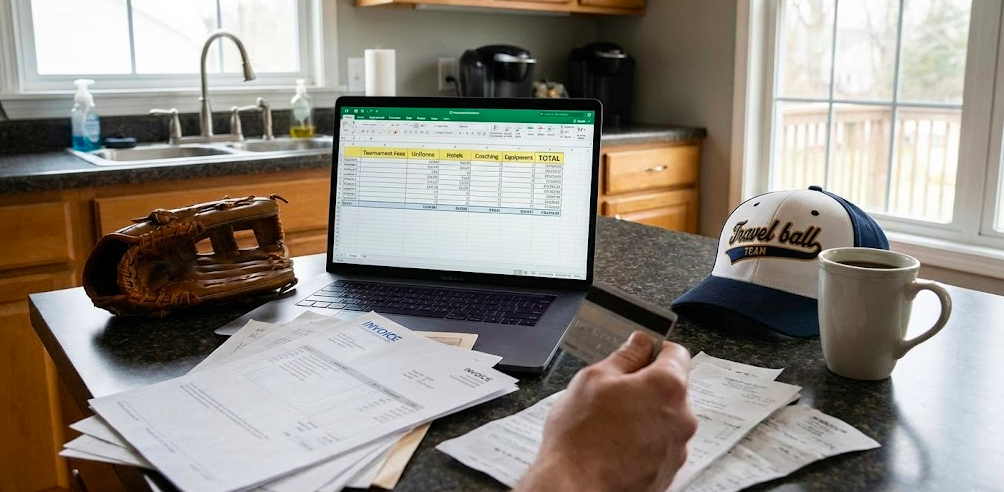
November is when many baseball and softball families get the call they hoped for. A coach offers a 2027 roster spot, asks for a signed player agreement, and wants a deposit soon. Excitement makes that paperwork feel like a formality. It is not. That document decides what you owe if your player is hurt, cut, or moves, and whether oral promises about position or playing time mean anything once the season starts.
This guide covers the clauses that matter most, with red-flag and green-flag checklists and questions to get answered in writing before you sign. It is practical guidance for families, not legal advice. Consumer rules vary by state.
Why the Fine Print Matters Now
Travel organizations book tournaments, order uniforms, and lock fields months ahead, so they want commitment when they offer a spot. Families are often asked to accept full-season fees before they have seen a spring schedule or a complete cost list.
Public player agreements commonly say deposits and season fees are nonrefundable if a player quits, is dismissed, or cannot play because of injury. Some clubs also keep remaining installment payments due after a player leaves. Those terms are common. Whether a specific clause is enforceable where you live depends on disclosure, state law, and what the organization actually delivers.
Before you focus on one clause, check the organization's track record through independent team reviews and the Club Power Index.
Deposits and Payment Schedules
Start with the money timeline.
Deposit amount and due date. Confirm whether the deposit is credited toward the season fee or sits on top of it.
Installment calendar. Ask for every due date in writing, including late fees and what happens if a payment is missed.
What the fee covers. Get a line-item list for tournament entries, practice facilities, insurance, coaching pay, and admin costs.
What the fee does not cover. Travel, hotels, gate fees, extra tournaments, showcases, and private lessons are often separate. Our guide to the real price tag of travel baseball unpacks those add-ons.
A clear schedule is a green flag. A one-line season fee with no breakdown is a red flag.
Nonrefundable Language, in Plain English
"Nonrefundable" usually means money already paid stays with the club if your family leaves for almost any reason, and remaining balances may still be owed. Treat that language as real. A label alone does not settle every dispute, though:
Disclosure before you pay. Policies you acknowledge before checkout are clearer than policies added after the deposit clears.
Delivery of what was promised. In 2015, the Ohio Attorney General sued Travel Ball America, alleging the company accepted team deposits for tournaments that never occurred and did not refund consumers.
Federal cooling-off limits. The Federal Trade Commission's Cooling-Off Rule gives buyers three business days to cancel certain sales made at a home, workplace, dormitory, or temporary location such as a hotel or fairground. Under 16 CFR 429.0, the rule does not cover sales completed entirely by mail or telephone, or sales made at the seller's permanent place of business. Most roster deposits accepted through a club website or at a permanent facility fall outside that rule. Do not assume a three-day out exists unless your agreement or state law clearly gives you one.
Read the refund section before you sign, keep copies of every email and receipt, and ask in writing how hardship, injury, and team cancellation are handled.
If the Player Is Cut, Injured, or Moves
Cut or dismissed. Many agreements say dismissal for conduct (player or parent) forfeits fees. Ask whether unpaid installments remain due after a coach-initiated release, and whether a written appeal process exists.
Injury. Some clubs treat injury like any other exit: full fee owed, no proration. Others review hardship claims when a doctor documents a season-ending injury. Get the rule in writing, including required documents, who decides, and whether the result is cash, credit, or a reduced balance.
Move or transfer. Ask whether a mid-season move ends remaining payments, whether paid fees can transfer, and who controls a roster release. A release that protects eligibility is not the same thing as a refund.
Playing Time, Fundraising, and Fee Add-Ons
Oral promises at tryouts often collide with a clause that gives the coach sole discretion over positions and playing time. Public travel club agreements routinely state that playing time is not guaranteed. If a position or minimum innings matter, get it in the written offer or do not rely on it. For a broader diligence list, see 10 questions to ask before committing to a travel team.
Fee creep usually lives outside the headline dues. Ask whether fundraising is mandatory and who keeps unused funds if a player leaves. Confirm how many uniform pieces are included and whether personalized items are nonrefundable once ordered. Ask how many tournaments are included, who decides to add more midseason, and how those costs are split. Weather credits often go to the team as future event credit, not cash back to parents.
Aspen Institute's Project Play parent survey found that average U.S. family spending on a child's primary sport reached $1,016 in 2024, up 46 percent since 2019, with baseball remaining the most expensive among the three most-played sports. Travel schedules can push families far above that average once hotels and extra events stack up. A complete cost sheet belongs next to the signature line.
Red Flags and Green Flags
Red flags: deposit due before you receive the full agreement; no written list of covered and uncovered costs; verbal position promises the contract disclaims; mandatory fundraising with no target or buyout; remaining installments due after a coach cuts the player, with no appeal path; same-day pressure to sign with no time to read.
Green flags: complete agreement emailed before the deposit is due; clear deposit credit, installment dates, and cost breakdown; written injury and team-cancellation policies (even if refunds are limited); a stated process for concerns; willingness to answer fee questions in writing; past-season schedules you can verify through reviews.
Questions to Get Answered in Writing Before You Sign
What exact amount is due now, what is due later, and what does each payment cover?
Under what conditions, if any, is the deposit or season fee refundable or convertible to credit?
If our player is injured, cut, or we move, what happens to money already paid and to unpaid installments?
Who decides added tournaments, uniform reorders, and fundraising obligations after we sign?
Are playing time, position, or innings promised anywhere in writing?
How does a roster release work if we need to change teams midseason?
If the organization cancels a team or shortens the season, what credit or refund applies?
For Coaches and Organization Owners
Clear agreements build trust. Spell out covered fees, add-ons, injury review steps, and team-cancellation remedies in plain language. Separate what is truly nonrefundable (ordered uniforms, spent tournament entries) from what you will discuss in good faith. Put the same terms on your website that you put in the signature packet.
Before You Commit the Money
Read the whole agreement. Compare the cost sheet with your family budget. Check independent reviews and the Club Power Index, not just the tryout highlight video. If a clause is unclear, ask for a written clarification and keep it with your copy. Walking away from a rushed offer is cheaper than funding a season you already regret in December.
At CurveballCritiques.com we believe that families deserve clear contracts, honest cost sheets, and time to decide before a 2027 roster deposit is due. A fair agreement protects players, parents, and the organizations that plan seasons in good faith.