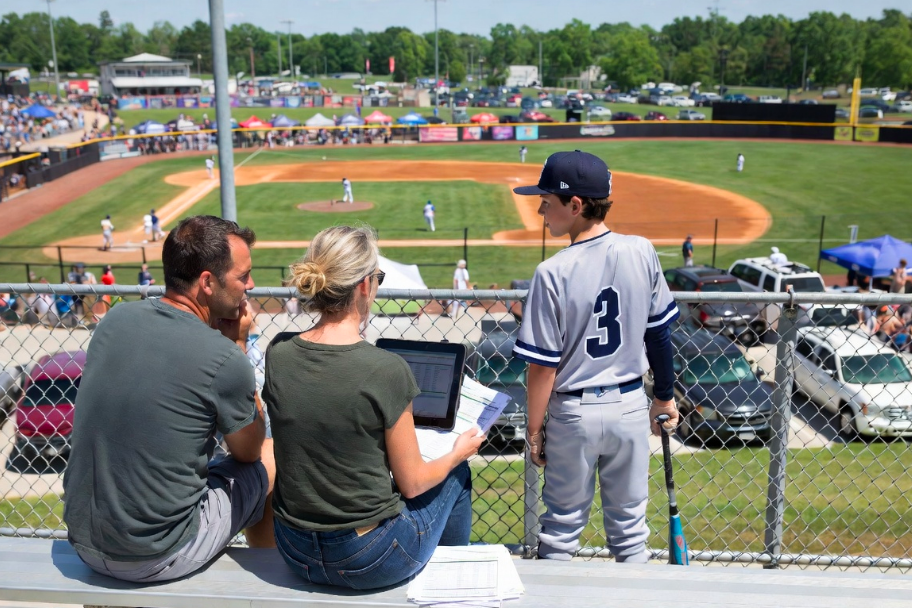
Most travel ball parents see the sport from the bleachers. You see the invoice, the missed call, and the rule that kept your kid off the mound on Sunday. What you usually do not see is the other side of the clipboard: the field permits, the umpire fees, the insurance certificates, and the rulebooks that tournament directors and organization owners have to satisfy before the first pitch.
We did not interview directors for this piece, so there are no anonymous quotes here. Instead, we pulled published fee schedules and rulebooks that anyone can check. When parents understand how the machine works, they ask better questions and become better partners.
Where a Tournament Fee Actually Goes
Start with the fields. Tournaments do not happen on free grass, and public parks departments publish what they charge. In 2026, the Somerset County Park Commission in New Jersey charges $205 per field per day for a non-lighted baseball or softball tournament at its North Branch and Duke Island Park fields for residents, and $410 for non-residents and commercial groups. A fully managed tournament day at its Mountain View Park, with lights and a crew that grooms the infield between every game, costs $740 to $950 per field.
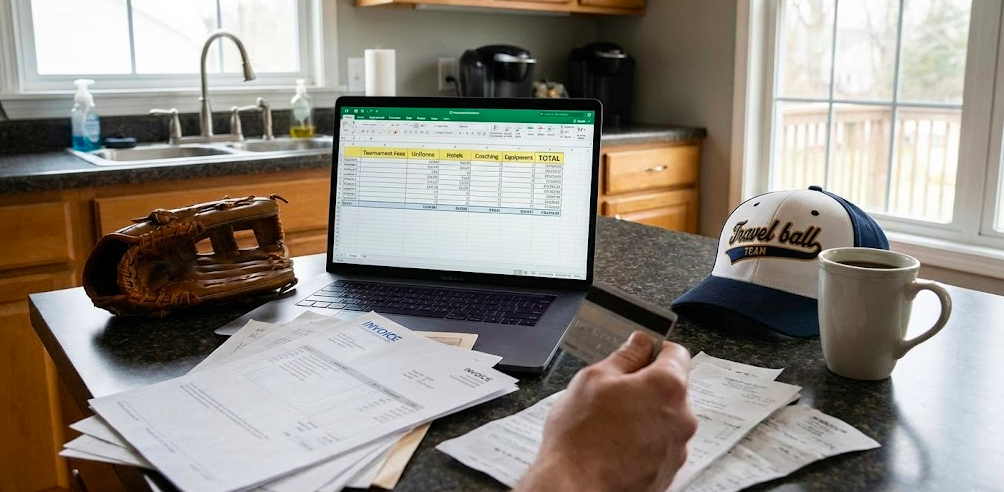
Run the numbers on a modest event. Three fields for two days at the $410 rate comes to $2,460 before a single umpire, baseball, or trophy is paid for. Cities also attach conditions. Roseville, Minnesota requires any league game or tournament on its fields to show proof of insurance that lists the city as an additional insured, meaning the city is covered by the renter's liability policy if something goes wrong.
Then there is the money families notice at the gate. Some events charge spectators admission, often called a gate fee, while others charge each team a flat gate fee. The 2026 Golden Glove Championship, a USSSA Florida baseball event, listed an entry fee of $250 to $350 per team plus a prepaid team gate fee of $275.
None of this is cheap for families either. The Aspen Institute's Project Play survey found that families spent an average of $1,016 on a child's primary sport in 2024, up 46% since 2019, and that baseball was the most expensive of the three most-played youth sports. The same report noted that some youth sports providers say they struggle to make ends meet. For the family side of the ledger, see Where Your Travel Ball Money Actually Goes.
Why You Are Handing Cash to the Umpire
If you have seen your coach hand an envelope to the umpire before a game, that is called pay at the plate. USSSA's Eastern Pennsylvania and New Jersey fastpitch office explains that umpire fees are no longer included in its tournament registration fees. In a standard two-umpire game, each team pays one umpire $70 in cash at the plate meeting. The organization says this lowers the upfront cost so teams can register early, and that teams no longer lose money on rained-out games or pay for games other teams play deeper in the bracket. USSSA Florida baseball events list similar rates, such as $60 per team per game for 9U to 12U.
Other events fold the cost into the entry fee. Perfect Game's youth tournament pages list game baseballs and umpire fees as included at several event levels. Neither model is a trick. They are two ways of moving the same cost.
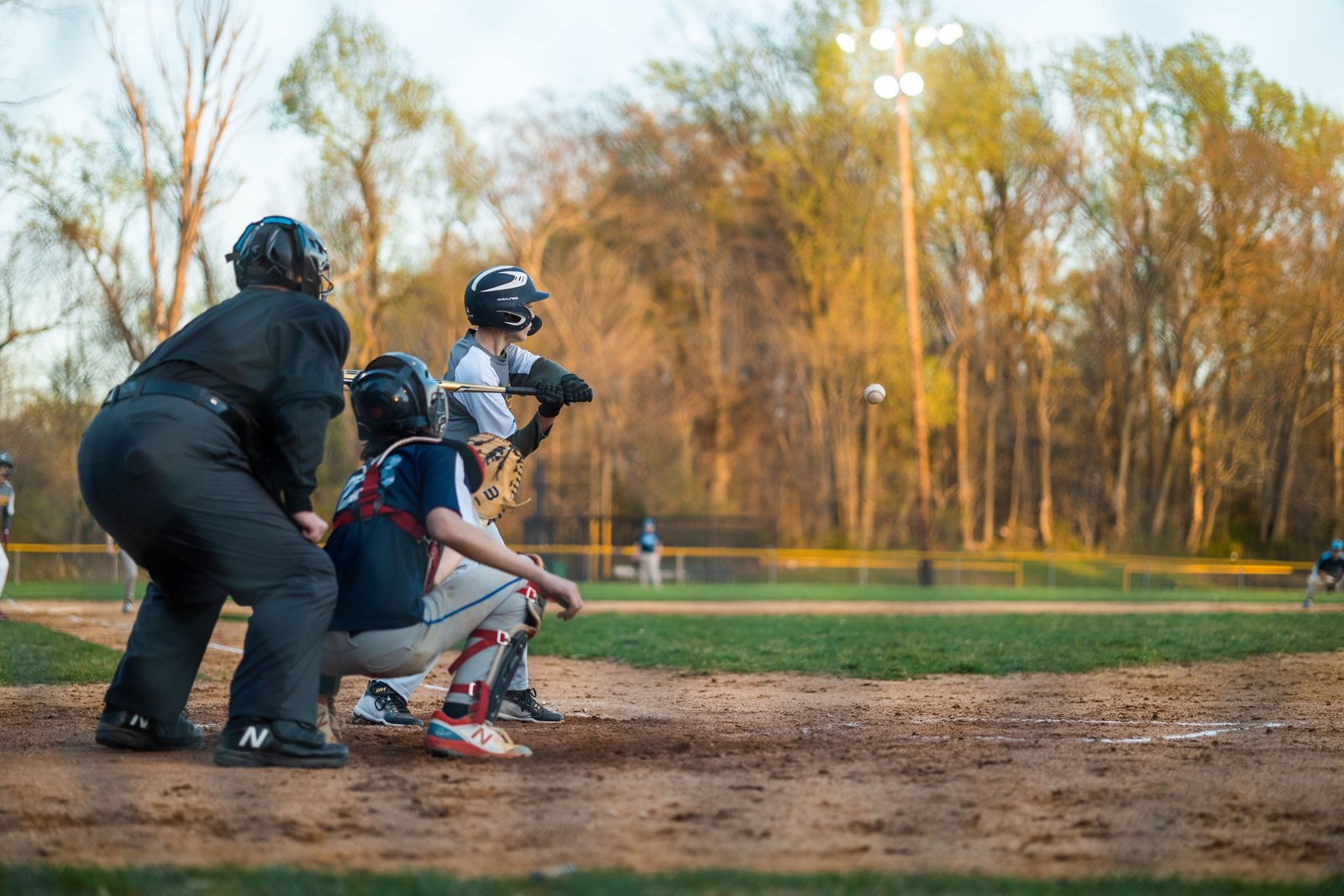
The harder truth is that there are not enough officials. The National Federation of State High School Associations (NFHS) reported that roughly 50,000 high school officials stopped officiating after the 2018-19 season, making it hard for some states to cover games with a full crew. In the National Association of Sports Officials (NASO) 2023 survey of 35,813 officials, who work youth and recreational events as well as school games, 68.81% said sportsmanship was getting worse and more than half said they had feared for their safety at some point. Umpire abuse is not only a manners problem. It is a staffing problem. We covered what families can do in Umpire Abuse Is Driving Good Officials Out of Travel Ball.
Roster Construction Is a Juggling Act
A roster can look like politics, but it is also a math problem. A team needs enough arms to stay inside pitch limits across a weekend, enough catchers to rotate, and enough players to absorb injuries, school events, and vacations. Too many players and playing time shrinks. Too few and the team may struggle to field a lineup.
Organizations also limit borrowing. USSSA baseball allows guest players, meaning players borrowed from another team, but from January 1 through the end of the season a team may use only three, and its guidelines say guest players are meant to help field a team, not to improve its competitive balance. Perfect Game's youth rules say a player who appears in a game for one team cannot play for another team that weekend, even in a different age group. Our piece on The Scourge of Guest Players in Travel Baseball looks at what happens when those rules get stretched.
Why Some Rules Feel So Rigid
Age cutoffs come first. Every sanctioning body, meaning the national organization that writes the rules for an event, picks a date. USSSA baseball uses May 1, so a player's age on May 1 is their playing age for the season, with some grade-based exceptions. USA Softball sets youth playing age as of August 31, and it does not change mid-season. A birth certificate check protects every family in the bracket who paid for an age-appropriate event.
Pitch counts come next. The Pitch Smart guidelines from MLB and USA Baseball set daily maximums of 75 pitches for ages 9 and 10, 85 for ages 11 and 12, and 95 for ages 13 to 16, with required rest days based on pitches thrown. Little League uses the same daily limits for baseball and tracks softball pitchers by innings, capping Minor and Major division softball pitchers at 12 innings a day. Pitch Smart also says that because players often play in several leagues with different rules, it is ultimately the parent's and athlete's responsibility to follow the guidelines across the year. For more, read Protecting a Young Player's Arm.
How to Be a Partner Instead of a Customer
You are paying, so it is fair to expect value. Still, a partnership usually gets better results than a complaint. A few habits help:
Read the event page and rules before your team registers, including how umpires are paid, any gate fee, and the weather and refund policy.
Ask your organization early for a written breakdown of what your team fee covers.
Track your child's pitches across every team they play for.
Take a disagreement about a call to your coach after the game instead of shouting it at the umpire.
Volunteer for one job, such as keeping score, counting pitches, or working the concession table.
A simple thank you after a long weekend also goes a long way. For a model of sideline behavior, The Sideline Parent Problem in 2026 is a good place to start.
At CurveballCritiques.com we believe that families make better decisions when they understand how travel ball works from both sides of the fence. Before you commit to your next team or tournament, read honest reviews from other families on CurveballCritiques.com and bring the questions this article raises.