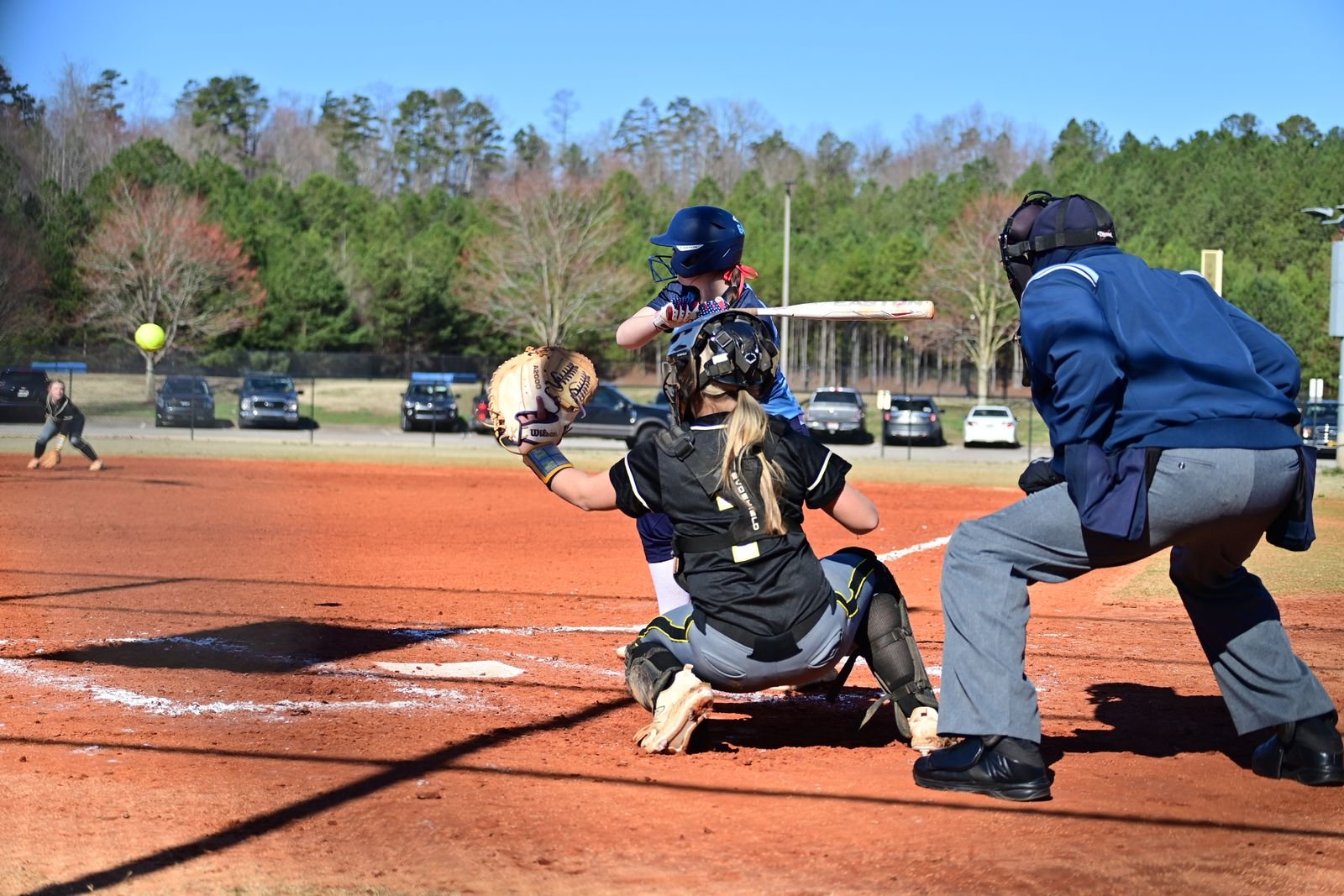
Fall ball ends, and for many travel softball pitchers the calendar barely changes. Lessons continue, indoor bullpens start, and some teams hold winter workouts before the holidays. Because the windmill motion looks smooth and natural, many adults assume a softball arm needs less protection than a baseball arm. The research does not support that.
Here is a practical offseason plan for travel softball pitchers from 12U to 18U: rest, a gradual return to throwing, strength work, warning signs, and how to push back on full bullpens in December. It is general guidance, not medical advice. A sports medicine professional who examines your player should have the final word.
The Underhand Myth
In a study of 24 elite pitchers at the 1996 Olympic Games, Werner and colleagues measured shoulder distraction stress (the force pulling the arm away from the shoulder socket) averaging 80 percent of body weight. They concluded the stress was similar to baseball pitchers and that windmill pitchers are at risk for overuse injuries. A 2004 review of windmill biomechanics summarized research showing that peak shoulder distraction in the windmill pitch approaches 80 to 95 percent of the values reported for the baseball pitch.
Softball simply has fewer guardrails. A 2024 narrative review in Sports Health noted that, as of 2023, neither USA Softball nor the National Federation of State High School Associations had established pitch count restrictions. A separate 2024 review of fastpitch injuries reported that pitch count limits are not used in any major fastpitch softball league.
Volume adds up fast. A study of 538 youth pitchers on 70 teams from 8U to 14U found that the average pitcher threw 813 pitches per year, while the average high-volume pitcher threw about 2,500. The top three pitchers on each team threw 82.4 percent of all team pitches. The top arms on a roster carry most of the load, which is why their offseason matters.
Step 1: Take Real Rest After Fall Ball
Rest is the foundation of the plan. The American Academy of Pediatrics, in its clinical report on sports specialization, recommends that young athletes take at least three months off per year from their main sport, in increments of one month, plus at least one to two days off per week. The American Orthopaedic Society for Sports Medicine (AOSSM) softball injury prevention tips put it bluntly: do not play year-round.
For most families, the natural window starts right after the last fall tournament:
Four weeks with no pitching. No lessons, no bullpens, and no "just a few spins" in the garage.
Stay active. Other sports, mobility, and general strength training are encouraged.
Get a check. If anything hurt during the fall, see a physical therapist or sports medicine doctor now.
With high school and summer travel seasons ahead, this may be her only true break all year. Protect it.
Step 2: Return to Throwing Gradually
After the break, rebuild in layers. A published set of interval throwing programs for collegiate softball players (Axe, Windley, and Snyder-Mackler, 2002) was designed for injured athletes and to support off-season conditioning. Its pitching program starts with long toss and pitching at up to 75 percent effort before off-speed work. The principle for a healthy pitcher coming off rest is the same: distance and volume before intensity. A sensible progression:
Easy, short overhand catch play a few days a week for one to two weeks.
Longer catch play and long toss, still at comfortable effort.
Windmill drill work (arm circles, K drills, walk throughs) at partial effort, focused on mechanics.
Short, moderate effort pitching sessions, adding pitches a little at a time.
Spins, movement pitches, and full effort bullpens saved for the weeks before team practice.
Keep a simple log of dates, session types, and pitch totals. It becomes the single source of truth when an instructor, a travel coach, and a high school coach all want the same arm.
AOSSM also recommends maximum pitch counts by age, such as 80 per game for ages 13 to 14 and 100 for ages 15 and over, and notes that rest means no live pitches, including batting practice. Winter sessions count toward the load too.
Step 3: Build Strength That Supports the Pitch
Winter is the best time to get stronger. The 2024 fastpitch injury review notes that core and lower extremity strengthening play an important role in injury prevention for pitchers, and that fatigue and games pitched are tied to strength deficits and pain. AOSSM advises pitchers to focus on flexibility rather than strengthening during the season, which makes the offseason the window for strength work.
Areas to cover, ideally with a qualified strength coach:
Lower body. Squats, split squats, step ups, and hip hinge patterns. The legs and hips drive the pitch.
Core and hips. Planks, anti rotation holds, and controlled medicine ball throws.
Shoulder and upper back. Rows, band external rotation, and shoulder blade control work.
Forearm and grip. Light, controlled work rather than max effort.
For more on what to do and skip in the weight room, see our guide to strength training for softball players.
Step 4: Know the Warning Signs
AOSSM lists shoulder tendinitis, back or neck pain, and elbow, forearm, and wrist tendinitis as the most common overuse injuries for softball pitchers. Its guidance is direct: do not pitch with pain, and see a doctor if pain lasts for a week.
Volume and pain travel together. The Sports Health review cites research finding that pitchers who threw more than 85 pitches per game were more than twice as likely to seek medical attention for an injury and to play through pain over a season.
Signs parents should not ignore during winter work:
Pain during or after pitching, or soreness that is still there the next day.
A sudden drop in speed or control.
Changes in mechanics, such as a shorter arm circle or a different stride.
Numbness or tingling in the hand or fingers.
Avoiding lessons or downplaying how her arm feels.
Step 5: Push Back on December Bullpens
Saying no to an instructor or coach is uncomfortable, but it can be calm and in writing:
"She is in a rest block until early December. We will start catch play then, and I am happy to share her plan."
"Before we add more lessons, can you tell me the goal and the rough pitch count for each session?"
A good instructor can explain why a session needs full effort. If a coach suggests a pitcher will lose her spot for a planned break, treat that as a culture signal. Independent Curveball Critiques team reviews from other families, and organization comparisons on the Club Power Index, can show how a program has treated pitchers before you commit. Our look at year-round pitching and burnout covers the baseball side of the same pressure.
A Simple Winter Calendar
Adjust this sample to the date her first spring practice starts:
November: No pitching. Other sports, mobility, general strength.
December: Rebuild catch play and add two to three strength sessions per week.
January: Windmill drill work and short, moderate effort pitching sessions.
February: Build toward full bullpens as team practices begin.
If her season starts earlier, move the whole calendar earlier rather than skipping the rest month.
At CurveballCritiques.com we believe that softball pitchers deserve the same careful arm care that baseball pitchers have been getting for years. Real rest, a patient return to throwing, smart strength work, and a family that tracks the load can help a pitcher reach spring healthy and stay in the circle for years.