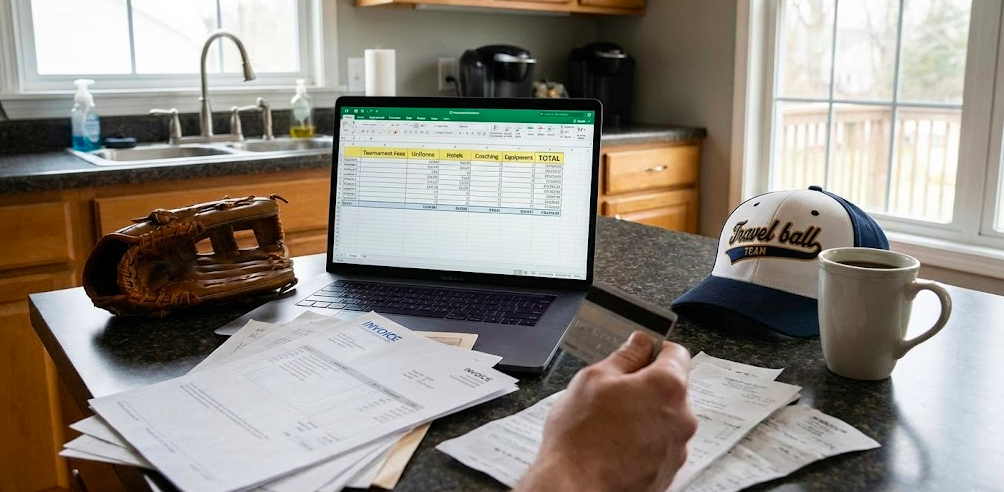
Winter is when travel baseball and softball teams set tournament schedules, order uniforms, and figure out how to cover the gap between the budget and the team fee. That job usually lands on the team manager.
Most families are willing to help. What wears them out is a season with no clear goal, too many asks, and a few parents doing all the work. This plan is built to avoid those problems.
Start With a Number Everyone Can See
Before choosing a single fundraiser, write down what the season actually costs and what the team fee already covers. Families are far more likely to support a specific, explained goal than a vague request to "help the team."
The pressure on families is real. The Aspen Institute's 2024 National Youth Sports Parent Survey found that the average family spent $1,016 on a child's primary sport in 2024, a 46 percent increase since 2019, according to Project Play's summary of the results. Baseball was the most expensive of the three most played sports, with families whose child's main sport was baseball reporting about $1,113 on average, and travel and lodging was the biggest single line. The survey covers all levels of play, so many travel families spend more.
A simple budget sheet for families should show:
The total season cost, broken into tournament entry fees, field and facility rental, umpires, uniforms, equipment, and coach travel if the team covers it.
What the player fee covers and what it does not.
The fundraising goal, which is the gap between those two numbers, plus a small reserve.
What happens to any money left over at the end of the season.
If you need a starting point for the line items, our guide on how to budget for a travel baseball season without going broke and our breakdown of the real price tag of travel baseball beyond the team fee walk through the common costs.
Pick Two or Three Fundraisers, Not Ten
A long list of small fundraisers looks busy, but every event needs someone to organize it, staff it, collect the money, and report on it. Choosing a few efforts and doing them well respects everyone's time.
A balanced winter plan might include:
One community or event fundraiser, such as a skills clinic for younger players, a pancake breakfast, or a restaurant night where a local business shares part of the sales.
Local business sponsorships, and winter, before the season starts, is a natural time to ask.
One online campaign that lets families share a link with relatives and friends who live out of town.
Set a start and end date for each one. A fundraiser that drags on all spring starts to feel like a chore.
Share the Work Fairly
Fundraising goes sideways when the same three parents run everything. Before the first event, build a short volunteer list with specific jobs and time estimates, and ask each family to pick one. Roles can include sponsor outreach, event setup, social media posts, bookkeeping, and thank you notes.
Give families with less free time options that still count, such as making two sponsor calls from home or posting the online campaign updates.
Track Money Without Shaming Anyone
Families should be able to see how the team is doing as a whole. They should not have to see a public ranking of who gave what. Post team totals, not family totals, in group messages and at parent meetings.
Keep clean records: one team bank account, two people who review every deposit and payment, and a short written report after each fundraiser.
There is also a rule many managers do not know about. If your team operates under a 501(c)(3) booster club or nonprofit, crediting the money a family raises toward that family's own player fees can create a problem. The IRS has told its agents that crediting fundraising amounts to a participant's dues or trip costs is a private benefit that could cause an organization to fail the 501(c)(3) requirements. In the Capital Gymnastics Booster Club case, the U.S. Tax Court upheld the loss of a booster club's exemption after it applied most of its fundraising profit to lower fees only for the families who fundraised. If your team uses individual player accounts, talk with a tax professional before the season starts. Money raised for the whole team and spent on the whole team is simpler and fairer.
Be Honest About Tax Deductions
Many travel teams are private clubs, not charities. Under IRS Publication 526, donations are deductible only when they go to a qualified organization, and gifts earmarked for a specific person are not deductible even then. Do not tell donors their gift is tax deductible unless you have confirmed the team's status, which anyone can look up with the IRS Tax Exempt Organization Search.
Make Local Sponsorships Easy to Say Yes To
Business owners want to know what they get and for how long. Put together a one page sponsor sheet with a few clear levels, such as a name on the team banner, a logo on the website or social posts, and a thank you at a home event. Include the number of players, the tournament schedule, and a contact person.
If the team is a nonprofit, IRS Publication 598 explains that a qualified sponsorship payment is one where the business receives no substantial benefit beyond the use or acknowledgment of its name, logo, or product lines, and that acknowledgment does not include advertising the sponsor's products or services. Keep sponsor recognition in that lane unless a tax professional says otherwise.
After the season, send each sponsor a team photo and a short note about how their support was used. That makes next winter's renewal conversation much easier.
Use Online Crowdfunding for Out of Town Supporters
Grandparents and family friends who live far away often want to help. An online campaign gives them a simple way to contribute. Write a short description of what the money will cover, post a team photo, and update supporters when you reach milestones.
Roster Raise is one option built for baseball and softball programs. According to its page, each player gets a personal sharing link, donors can give by card, Apple Pay, or Google Pay without creating an account, and funds are processed through Stripe and routed to the team's bank account. It also includes a player leaderboard, so decide as a team whether you want to highlight individual totals or keep the focus on the team goal. You can read more in our post on Roster Raise and how it works for baseball programs.
A Simple Winter Timeline
December: Finalize the budget, share it with families, and recruit volunteers.
January: Send sponsor sheets to local businesses and launch the online campaign.
February: Hold the community event and send a progress update.
March: Close out fundraising, post the final total, and thank every family and sponsor.
Bottom Line
The travel baseball fundraising ideas that work best are rarely the most creative. They start with a transparent goal, use a small number of well run efforts, spread the work evenly, and keep the books clean enough that any family could check them.
At CurveballCritiques.com we believe that families support what they understand. When a team manager shows the real numbers, shares the work, and treats every family with respect, fundraising stops being a source of tension and becomes one more way the team pulls together.