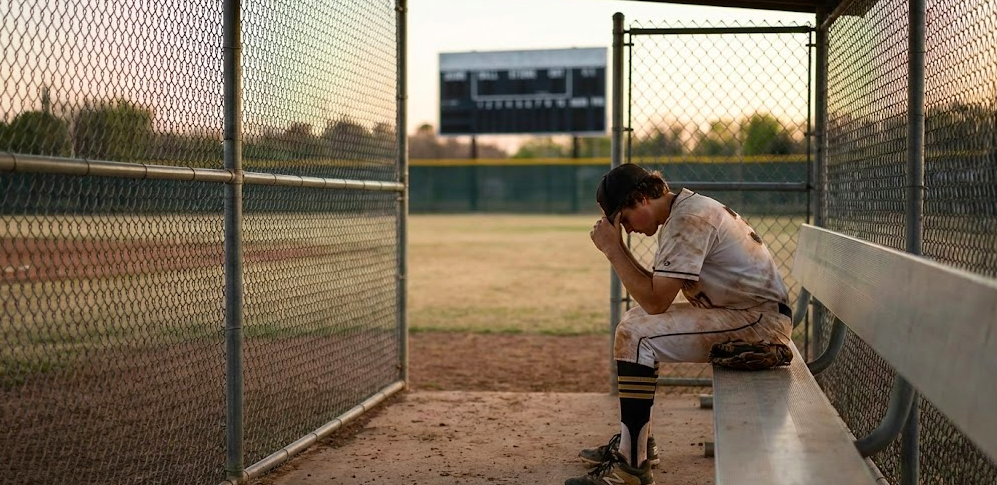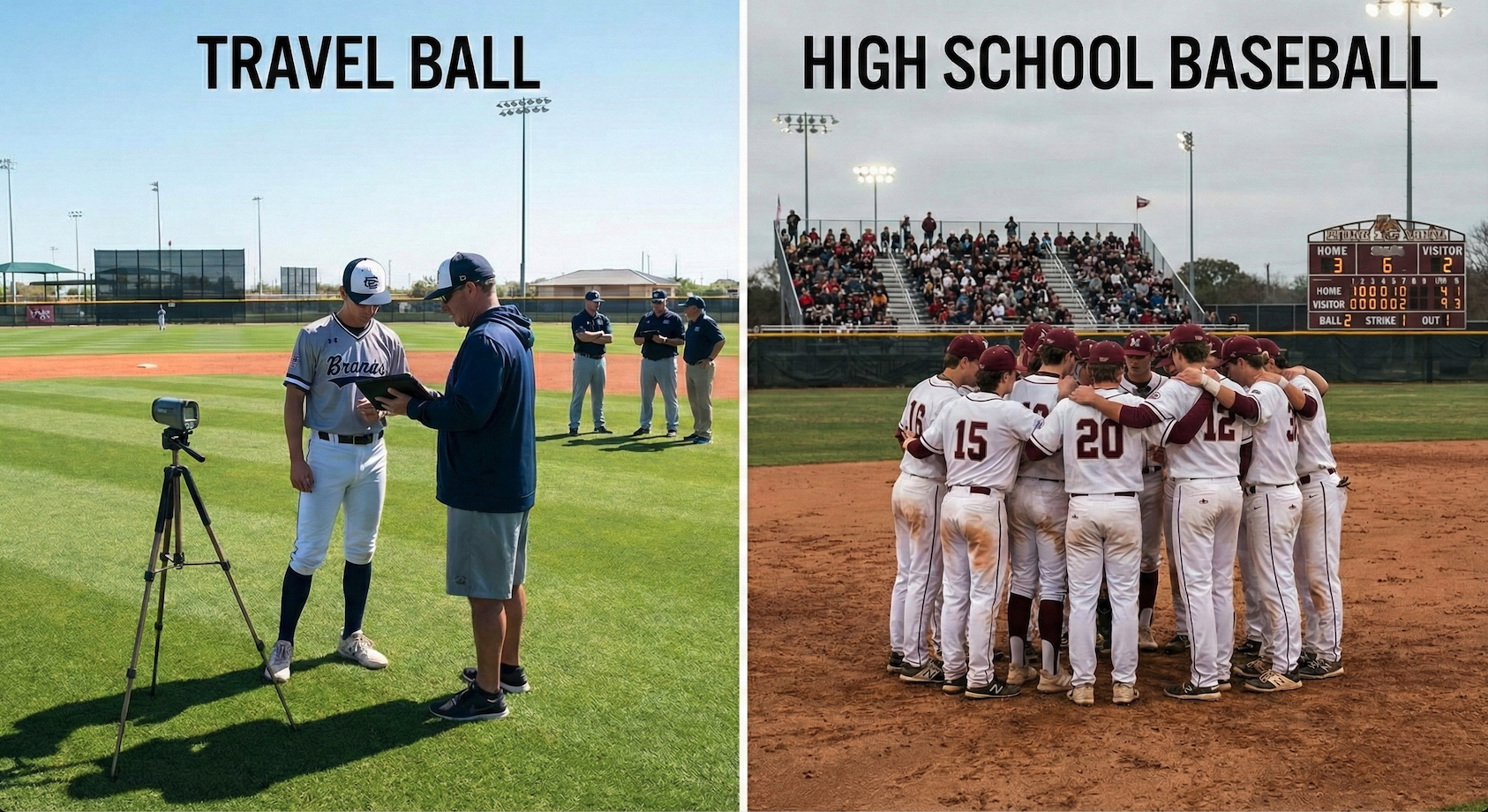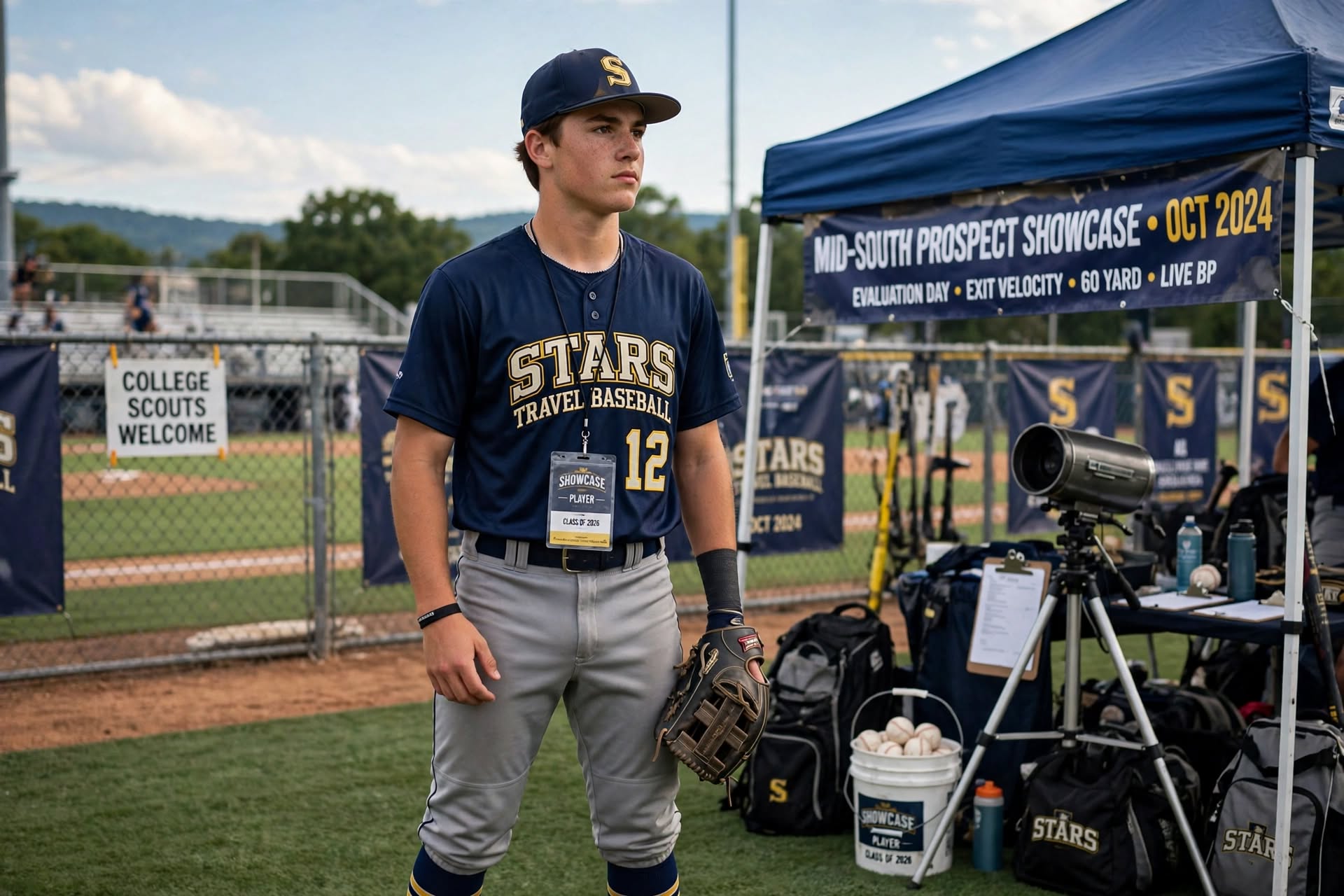
Every winter, a lot of baseball and softball families open two calendars and realize they do not fit together. The travel team has winter workouts, a January showcase, and an early spring tournament on the books. The high school program has open gym, conditioning, and a tryout window that lands right on top of one of those weekends. Nobody planned the conflict, but the player still has to show up somewhere.
This guide is for families heading into the 2027 high school season who want to handle both sides well. It covers how to talk with the travel coach before tryouts, what high school coaches tend to weigh beyond travel stats, when missing a travel weekend is worth it, and how to avoid burning bridges in either direction.
Why the Calendars Collide
High school baseball and softball are big programs. The National Federation of State High School Associations (NFHS) 2024-25 participation survey counted 473,979 high school baseball players and more than 330,000 fast-pitch softball players nationwide. Many of those athletes also play travel ball, and both sides now plan the late winter and early spring months well in advance.
The rules also differ by state. Each state association sets its own policy on playing for a non-school team during the high school season. A few examples show how wide the range is:
Arizona's AIA general provisions say a student on a school baseball or softball team may not practice or compete with another team in that sport during the interscholastic season, though individual private lessons are allowed outside the school day and school practices.
Nebraska's NSAA baseball manual says a student who plays on any baseball team other than the school team during the baseball season becomes ineligible to represent the school in baseball for the rest of that school year.
Minnesota's MSHSL baseball guide allows individual players to play with independent amateur teams during the high school season, with conditions.
The practical takeaway is simple: before you promise anything to either coach, read your own state association's rules on non-school participation and confirm your school's season start date with the athletic office. Rules change, and a travel tournament that is harmless in one state can cost a season of eligibility in another.
Talk to the Travel Coach Before Tryouts, Not After
Most bridge-burning starts with surprise. A travel coach who learns on Thursday that a starting pitcher will miss Saturday has every right to be frustrated. The same coach, told in December, can usually plan around it.
A good conversation covers a few things:
The dates. Share the high school tryout window, open gym schedule, and any conditioning days as soon as the school posts them.
The priority. Say plainly that the high school tryout comes first that week, and explain why.
The plan. Offer what the player can still do, such as a weekday workout or the second day of a tournament.
The question. Ask how the team handles school conflicts. A program that already has a clear policy is usually a well-run program.
Most experienced travel coaches have seen this conflict many times. If a coach reacts to a reasonable, early heads-up with threats about playing time or a lost roster spot, that tells you something about the program. Our post on travel ball coach red flags covers more of those warning signs.
What High School Coaches Weigh Beyond Travel Stats
Travel ball can build skill and game reps, but a high school coach is filling a roster for a school team. Many coaches pay close attention to things a travel stat line never shows: whether a player is on time, coachable, eligible academically, and willing to take a role. They also notice who attends optional winter workouts and who only shows up for the tryout itself.
That does not mean every open gym is mandatory, and families should not assume the most visible player always makes the team. It does mean that skipping the school's winter sessions to chase a travel event can send a message you did not intend. For a closer look at the evaluation side, read the skills high school coaches actually look for during tryouts and freshman on JV or varsity: how good do you really need to be.
When Missing a Travel Weekend Is Worth It
Not every conflict is equal. A simple way to sort them is to ask what each event decides.
Tryouts and required evaluation days. These decide whether the player has a high school roster spot at all. In most cases, they win.
Optional school workouts in the weeks before tryouts. These do not decide anything on their own, but they build familiarity with the coaching staff. They often outweigh a regular travel practice.
A single travel tournament weekend. One missed event rarely changes a travel season. It matters more if the player is a key pitcher or catcher and the coach has no backup.
Showcases sold as one-time chances. Treat urgency with some caution. Few showcases are truly one of a kind, and most have later dates.
Workload is part of the decision too. The MLB and USA Baseball Pitch Smart guidelines for ages 15 to 18 advise pitchers to avoid playing for multiple teams at the same time and to follow pitch limits across leagues, tournaments and showcases. When two teams both want innings in the same month, rest should decide the tie, not whichever coach asks loudest. Softball pitchers face similar overuse risk, so families should coordinate workloads across both teams there as well.
Avoid Burning Bridges on Either Side
The baseball and softball world in most regions is small. The travel coach this winter may coach the summer team next year, and the high school staff often talks with local travel programs. A few habits keep both relationships healthy:
Put schedule conflicts in writing, with dates, so nothing depends on memory.
Let the player do the talking when possible. Coaches respect a teenager who explains a conflict directly.
Do not criticize one program to the other. It travels.
Keep commitments you already made unless a true conflict appears, and give notice when one does.
If you decide to leave a travel team, read your contract and refund terms first. Our guide on reading a travel ball team contract walks through what to check.
A Simple Winter Planning Checklist
Before January gets busy, sit down as a family and work through this list:
Get the high school tryout dates, open gym schedule, and season start date in writing.
Read your state association's non-school participation rule for your sport.
List every travel event from December through the end of tryouts.
Mark the true conflicts and decide priorities ahead of time.
Tell the travel coach about the conflicts in one early, clear message.
Agree on a combined throwing or pitching plan if the player pitches for both teams.
Revisit the plan once rosters are set.
If you want a broader view of how the two paths compare, our article on when to double down on travel ball and when to diversify is a good next read.
Final Thoughts
At CurveballCritiques.com we believe that families make better choices when they have honest information before the pressure starts. Plan the calendar early, know your state's rules, and talk to both coaches with respect. If you are choosing or reconsidering a travel program for 2027, you can read and share program experiences through Curveball Critiques reviews, so the next family has a clearer picture of how a team handles school commitments.