From November through February, a lot of travel baseball and softball development moves indoors. Families buy cage memberships and sign up for facility hitting programs. It feels productive, and it can be. But many players take thousands of winter swings and still look surprised by the first live fastball or rise ball in March.
That gap is what we call the winter development trap: lots of volume, very little transfer. This guide is for families of 11U to 16U baseball and softball players who want their indoor time to actually show up on the field in the spring. If you want the bigger picture on winter workloads first, our article on the offseason training myth covers why more baseball-specific work is not always better.
What the Winter Development Trap Looks Like
The trap rarely looks like a problem from the outside. A typical version goes like this:
The player hits in the same cage, off the same machine, at the same speed, two or three nights a week.
Rounds are long, and the goal becomes hard contact rather than a specific skill.
Nobody tracks anything week to week.
Strength, mobility, and sleep get squeezed out because the cage is where the "real" work happens.
None of this is harmful on its own. The issue is that a predictable cage is very different from a game, where pitch type, speed, and location change every pitch.
Why Repetition Alone Does Not Transfer
Motor learning research has looked at this question directly. In a well known study published in Perceptual and Motor Skills, Hall, Domingues, and Cavazos (1994) gave players on a junior college baseball team two extra batting practice sessions per week for six weeks. Each session had 45 pitches: fastballs, curveballs, and changeups. One group saw the pitches in blocks (all 15 of one type, then the next), while another group saw them in random order. A third group got no extra practice.
On later tests, the random group outperformed the blocked group, which outperformed the group with no extra practice. Compared with their pretest scores on a random test, the random group improved 56.7 percent, the blocked group 24.8 percent, and the control group 6.2 percent. The study involved older, skilled hitters, so the numbers may not apply to a 12U player, but it supports a practical idea: practice that forces a hitter to read and decide tends to carry over better.
For families, the takeaway is simple: a session that feels a little harder, with more variety and more decisions, is often the one that builds a game swing.
Facility Programs: Volume Versus Quality
Some facilities run thoughtful small-group programs with planned sessions. Others sell blocks of time and leave the rest to the player. Before you commit to a winter package, ask:
What is the goal of each session, and how will my player know if it is working?
How many players does one coach work with at a time?
How often do hitters see live arms or varied machine settings rather than one speed?
Does the program include strength, mobility, or throwing progressions, or is it cage only?
What does the facility recommend for rest weeks over the holidays and before spring?
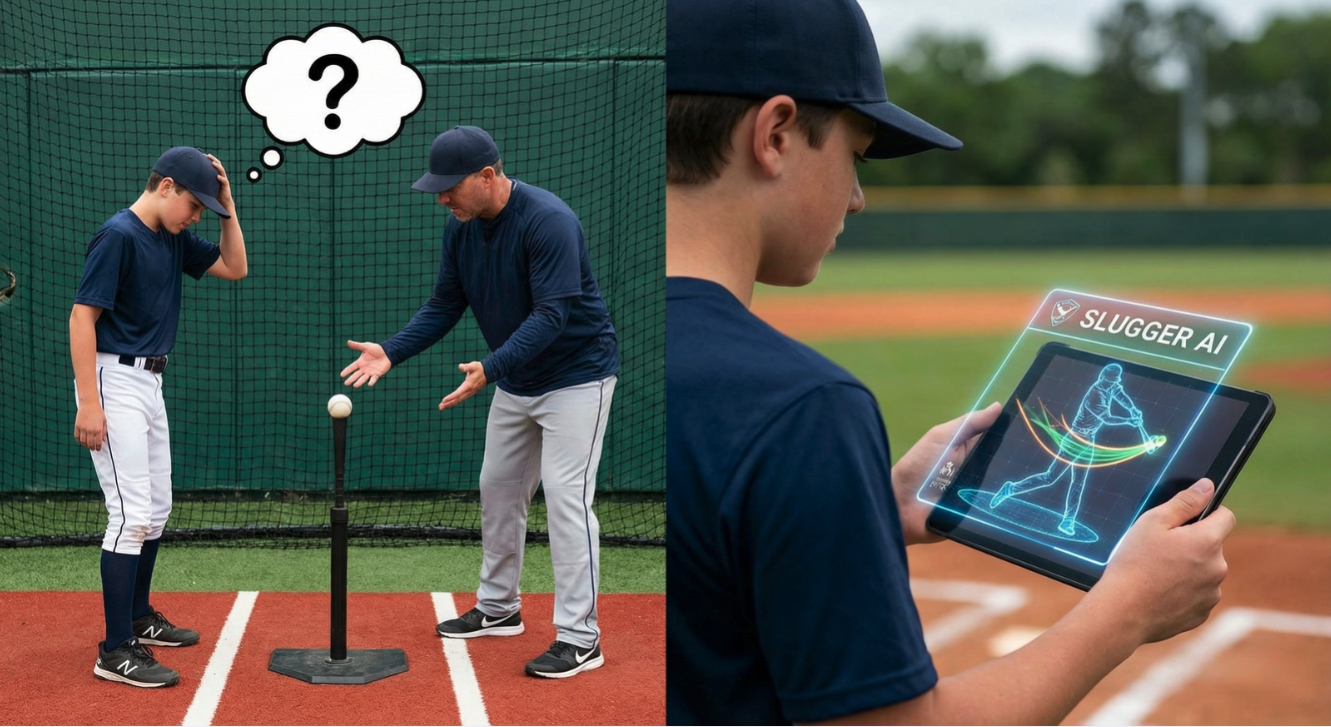
A program that can answer these clearly is usually planning for transfer. A program that mostly talks about hours and swing counts is usually selling volume. Families comparing programs can also read and share experiences through Curveball Critiques reviews. Our breakdown of which training tech and apps are actually worth it can help if a facility is also pitching sensors or subscriptions, and the gear and training aid hype cycle covers what tends to collect dust.
How to Structure a Cage Session That Transfers
A focused 45 to 60 minute session can be more useful than two unplanned hours. Here is one simple structure for baseball and softball hitters:
Warm up with purpose (10 minutes). Movement prep, then light tee or flips to find the barrel.
One technical focus (10 to 15 minutes). Pick one thing, such as staying through the middle of the field or keeping the front side closed. Work on it with tee or front toss.
Speed and timing (10 to 15 minutes). Move to the machine or live arm and change speeds between rounds rather than staying at one setting for the whole session.
Decision rounds (10 to 15 minutes). Mix pitch types or locations so the hitter has to decide whether to swing. Count takes and good swing decisions, not just hard contact.
Short game situations (5 minutes). Two-strike approach, a runner on third with less than two outs, or hitting behind a runner.
Write down one or two notes after each session. That small habit turns a pile of swings into a plan you can check in the spring. If your player is working with a hitting instructor, our guide to when to hire a hitting coach and when technology can help is a useful companion.
When Open Gym Time Is Better Spent Elsewhere
Open facility hours do not all need to be spent hitting. The bigger winter gains often come from the work that is easy to skip.
Strength and Mobility
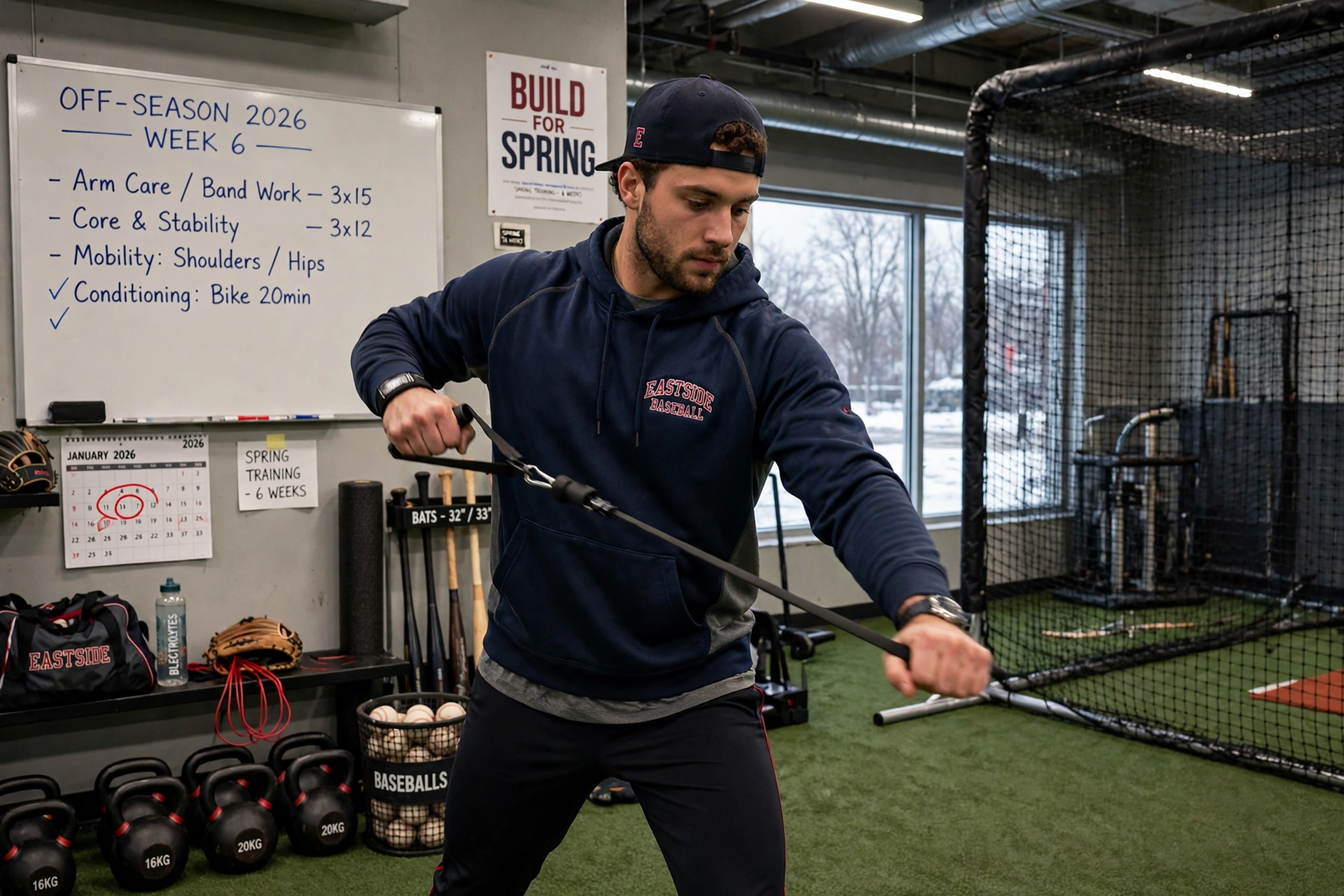
The American Academy of Pediatrics clinical report on resistance training says children and adolescents can safely gain strength when training is well supervised and emphasizes correct technique. It also notes that strength gains generally require sessions of at least 20 to 30 minutes, two to three times per week on nonconsecutive days. Two short, coached strength sessions may do more for spring than a third cage night.
Throwing Rest
Indoor months are also when arms should get real rest. The American Sports Medicine Institute recommends no overhead throwing of any kind for at least 2 to 3 months per year (4 months preferred) and no competitive pitching for at least 4 months per year for adolescent baseball pitchers. Softball pitchers have different mechanics and fewer formal guidelines, but they still need planned rest, which we cover in our softball winter arm care plan.
Sleep and Rest Days
The American Academy of Sleep Medicine recommends that teenagers 13 to 18 sleep 8 to 10 hours per 24 hours on a regular basis, and that children 6 to 12 sleep 9 to 12 hours. Late cage slots on school nights can quietly cut into that, so skipping a 9 PM slot may be the better development choice.
A Sample Winter Week for an 11U to 16U Player
Treat this as an example to adjust with your coach, not a prescription:
Two focused cage sessions of 45 to 60 minutes, built around the structure above.
Two short strength and mobility sessions on other days, supervised and technique first.
One day of another sport or active play to build general athleticism.
At least one full rest day with no organized training.
Throwing that follows the player's rest plan, not the facility's open schedule.
For more ideas on how to divide the off months, see what travel baseball players should be doing in the fall and winter. If cost is part of the decision, our article on building a sensible winter lesson budget walks through how to avoid paying for more hours than your player can use well.
Final Thoughts
At CurveballCritiques.com we believe that winter development should be measured by what shows up on the field in the spring, not by how many swings were taken indoors. A few focused cage sessions, real strength work, planned rest, and good sleep will serve most 11U to 16U players better than endless rounds off the same machine. Plan each session with a purpose and protect the recovery that makes the work stick.